De la chacra a la mesa

Author: tungasuk@gmail.com

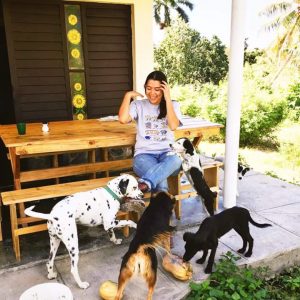
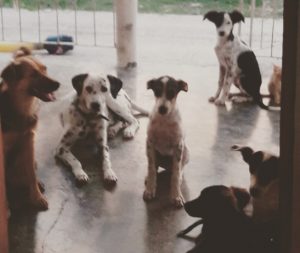
Eulogy to our farm dogs

By our friend Sol,

“As I write these words, I am swinging on a hammock on a warm sunny day, the perfect climate after a week of cold, rain, and tragedy. I am under the shade of the avocado and anon trees that the dogs of Finca Tungasuk liked to eat so much, from the top of the hill where the house where they played is built, overlooking the fields, the crops that that these dogs loyally protected. It’s a beautiful morning, almost too beautiful to think about writing this eulogy. But in the midst of this tranquility, there is a silence that I hear from this hammock that must be addressed. This is a post to say goodbye publicly to five dogs of Finca Tungsuk, who were poisoned in the last month.
Chaplin, Chela, Pirata, and Mini died on January 1, 2018. Chucho died in December of 2017. Their absence is felt every day, and we remember them and the impact that they left on our lives. Please read on, share memories and photos of your own, and join us in honoring their legacies as the first farm dogs of Finca Tungasuk.


Building Climate Resilience in Agriculture from UN CC:e-Learn Platform

When I visited my family in Nicaragua after Hurricane Irma in September, I was thrilled to have 24/7 fast internet—a luxury we don’t yet have at Finca Tungasuk (as you may know, internet access is still challenging in the Cuban countryside, though hopefully that will change soon!). While I was there, I saw a Facebook link announcing an upcoming UN CC: e-Learn Platform course: “The National Adaptation Plans: Building Climate Resilience in Agriculture.”

Being away from the farm allowed me the time and distance to process what had just happened to us and to roughly 75% of the island. We had just endured a very active hurricane season in 2017, and it was my first time experiencing the impact of a severe weather event like Hurricane Irma from the countryside. We lost some trees and sustained damages, but we fared relatively “well” compared to the central and eastern parts of the country. (You can find more information in this report on Hurricane Irma and Cuba). I immediately started questioning what we could have done to avoid some of the losses and damages caused by the wind on the farm, and what measures we could take to prepare for another event like it.

It felt like perfect timing to gain access to such a vast reservoir of resources on climate change information, mitigation, and adaptation actions.

Une journée de volontariat à Finca Tungasuk

Ça fait longtemps j’hésite d’écrire ce post en français pour essayer de partager avec nos amis et personnes francophones qui s’interesse de faire des échanges dans notre ferme bio et savoir ce qui se passe á ce moment lá.
Il y a deux semaines un peu près on a eu une famille française qui est venu faire du volontariat (2 adultes et 3 enfants) et nous ont donné le bon conseil d’écrire un post similaire a cel qu’on a dans ce même site web mais en anglais. C’est grâce a cet information qu’ils nous ont trouvé en cherchant sur Internet des opportunités de faire des échanges culturels/educatifs en familles avec d’autres familles au Cuba.

Finca Tungasuk c’est notre ferme/maison bio, et petit paradis à 25 km de La Havane vers l’ouest.

Il y a 3 ans on a décidé de s’embarquer dans cet aventure/projet de vie. On a quitté la France où j’ai eu l’opportunité de travailler et rencontrer de gens/cuisiniers/chefs qui m’ont inspirer. Il y a de plus en plus de gens qui mets en valeur le travail de fermiers/potagers bio. Plusieurs chefs et restaurants/bistrots qui en partenariat avec de fermes bio proposent de menus qui permetent au gens de s’approcher à l’univers des producteurs.
Depuis le début de cet aventure on s’est rendu compte qu’il y a tellement beaucoups de défis qui s’echappent à nos yeux avant de commencer. On est toujours des apprentis et j’imagine ça s’arretera jamais.
Même nos collaborateurs, plusieurs d’entre eux de gens qui ont travaillé dans les plantations de canne de sucre pendant toutes leurs vies, apprends en même temps que nous à prendre soin du sol.
Vous trouverez de beaux articles et films documentaires qui explique mieux et en détail comment le Cuba a survecu l’embargo surtout au niveau de production des aliments. Je rentrerais pas en détail ici sur ce sujet. Mais on essaye de partager pendant notre journée
ensemble ces connaissances et aussi notre apprentissage dans l’île.

Si vous voulez venir faire du volontariat pour une matinée veuillez nous contacter pour vous envoyer des informations.

tungasuk@gmail.com
C.c
annabelle@nauta.cu

On ferais notre mieux de répondre au plus vite possible mais comprenez que l’accès Internet c’est encore limité.

Liens utils

Voyager et faire du volontariat, nos bons plans

Comment les cubains ont converti leur ile au bio
Page 2 of 2

Powered by WordPress & Theme by Anders Norén